
Contents
How Does Air Cargo Move From Pickup to Final Delivery?
When a shipment is transported by air, the actual flight is only one part of the journey.
Before an aircraft takes off, cargo must go through several operational steps. After landing, the shipment may still need customs clearance, warehouse handling and final delivery.
For businesses and individuals using international logistics services, understanding this process can make shipping much easier.
So, what actually happens to a shipment from the moment it leaves the sender until it reaches the final destination?
1. Shipment Pickup and Initial Preparation
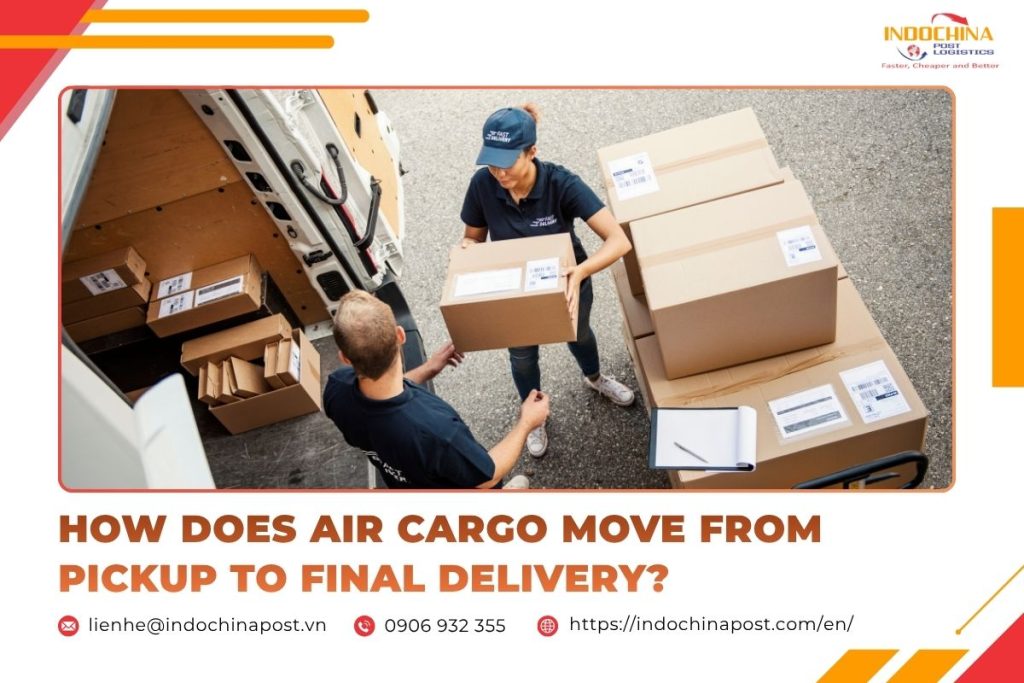
The journey begins when the cargo is collected from the sender.
At this stage, the logistics provider needs accurate information about the shipment.
Typical information includes:
- Product description.
- Quantity.
- Weight.
- Dimensions.
- Pickup address.
- Destination.
- Receiver information.
- Special handling requirements.
This information is important because different types of cargo may require different transportation solutions.
For example, electronics with lithium batteries may require additional checks. Fragile products may need stronger packaging. Temperature-sensitive goods may require special handling.
A clear shipment description also helps the logistics provider determine whether the cargo can be transported by air.

2. Packaging and Cargo Inspection
Proper packaging is one of the most important parts of international transportation.
Cargo may be handled several times during its journey. It can move through warehouses, cargo terminals, security screening areas and transportation facilities.
Packaging must therefore be strong enough to protect the goods during handling.
The packaging requirements depend on the product.
Fragile goods may need cushioning materials. Electronics may require protection against impact. Food products may need packaging that helps protect them from moisture and contamination.
For certain types of cargo, the logistics provider may also inspect the shipment before accepting it for transportation.
3. Booking and Space Confirmation
Once the shipment information is available, the logistics provider can arrange transportation.
For international Air Cargo, booking involves selecting an appropriate route and flight schedule.
However, a flight does not always have unlimited cargo capacity.
Available space can depend on:
- Aircraft type.
- Cargo volume.
- Weight limitations.
- Flight schedule.
- Destination.
- Existing cargo bookings.
- Special handling requirements.
After the booking is confirmed, the shipment can move into the airport cargo process.

4. Cargo Acceptance at the Airport
The shipment is delivered to a cargo terminal or designated handling facility.
This stage is often called cargo acceptance.
The cargo may be checked against the booking information.
The handling team can verify details such as:
- Number of packages.
- Actual weight.
- Dimensions.
- Packaging condition.
- Shipping documents.
- Special cargo information.
If there is a difference between the booking information and the actual shipment, additional checks may be required.
This is why accurate information at the beginning of the process is so important.
5. Security Screening
Before cargo can be loaded onto an aircraft, it must meet applicable aviation security requirements.
Depending on the shipment and local regulations, cargo may undergo security screening.
Screening can involve different methods, including X-ray inspection and other approved security procedures.
The purpose is to identify potential security risks before the cargo enters the aircraft supply chain.
Security screening is not simply an administrative step.
It is an important part of maintaining the safety of the entire aviation system.
6. Cargo Handling and Preparation for Loading
After acceptance and security procedures, cargo is prepared for transportation.
Cargo may be sorted according to flight, destination and handling requirements.
Some shipments are consolidated with other packages.
Others may require separate handling because of their characteristics.
The cargo is then prepared for loading.
Depending on the aircraft and cargo operation, shipments may be placed into specialized equipment such as Unit Load Devices (ULDs).
ULDs allow multiple pieces of cargo to be handled as a single unit.
This makes the loading and unloading process more efficient.

7. Loading the Aircraft
Cargo is eventually transferred from the terminal to the aircraft.
At this stage, loading must follow specific operational requirements.
Weight distribution is particularly important.
Cargo cannot simply be placed wherever there is available space.
The loading process needs to consider aircraft limitations, cargo characteristics and the overall loading plan.
Once the cargo is properly positioned and secured, the aircraft can be prepared for departure.
This explains why cargo often needs to arrive at the airport well before the scheduled departure time.
8. The Air Transportation Stage
The aircraft then begins its journey.
Depending on the route, cargo may travel directly to the destination or move through one or more transit airports.
A direct route is generally simpler.
A transit route may involve additional handling and transfers between flights.
During this stage, shipment visibility becomes important.
Tracking information allows logistics providers and customers to monitor key shipment events as the cargo moves through the network.
9. Arrival at the Destination Airport
Once the aircraft arrives, the cargo is unloaded and transferred to the destination cargo facility.
But arrival at the airport does not always mean the shipment is ready for delivery.
The cargo may still need to complete customs procedures.
This is especially important for international shipments entering a new country.
The customs process can involve reviewing shipment information, commercial documents, product descriptions and declared values.
Additional requirements may apply depending on the type of goods and destination regulations.

10. Customs Clearance
Customs clearance is a major part of international logistics.
Authorities may assess whether the shipment complies with import requirements.
Depending on the shipment, customs procedures may involve:
- Import declarations.
- Commercial invoices.
- Product information.
- Duties and taxes.
- Permits or licenses.
- Additional inspections.
Not every shipment follows exactly the same process.
The requirements depend on the destination country, product category, shipment value and purpose of import.
For this reason, preparing accurate documents before shipment can help reduce unnecessary delays.
11. Final Delivery
After customs clearance, the shipment can move to the next stage.
The cargo may be transferred to a local delivery facility or transportation partner.
From there, it is delivered to the final recipient.
This is often called last-mile delivery.
For door-to-door logistics services, the shipment journey can therefore be summarized as:
Pickup → Packaging → Booking → Cargo Acceptance → Security Screening → Handling → Aircraft Loading → Air Transportation → Arrival → Customs Clearance → Final Delivery
The flight itself is only one part of this entire process.
Conclusion
Air Cargo may look simple from the outside.
A shipment is collected, placed on an aircraft and delivered to another country.
In reality, the process involves many different stages.
Cargo must be prepared, accepted, screened, handled, loaded, transported, cleared through customs and finally delivered.
Each stage has its own requirements.
That is why successful international shipping depends not only on the aircraft itself but also on accurate information, proper packaging, reliable documentation and effective logistics coordination.
For businesses shipping internationally, understanding this process is the first step toward choosing the right transportation solution and preparing cargo more efficiently.
See More
Why Can’t an Aircraft Carry Every Type of Cargo?
How Does International Logistics Work?
YIELD MANAGEMENT IN AIR CARGO: HOW AIRLINES GENERATE REVENUE FROM EVERY KILOGRAM OF FREIGHT
Shipping Instant Noodles to South Korea: Latest Regulations and Tips for Fast Customs Clearance
