Contents
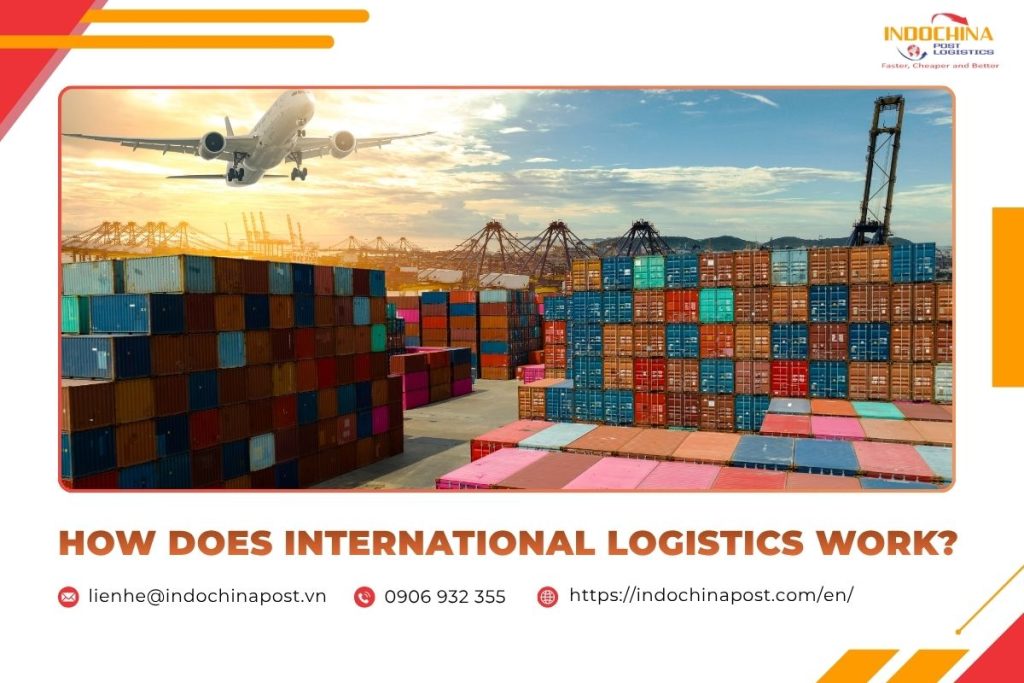
How Does International Logistics Work?
International logistics is more than simply moving goods from one country to another.
Behind every shipment is a series of connected processes. Goods need to be collected, packed, documented, transported, cleared through customs and delivered to the final destination.
When these processes work smoothly, goods can move across borders safely and efficiently.
But what actually happens to a shipment after it leaves the seller?

What Is International Logistics?
International logistics refers to the planning and management of goods as they move between countries.
It covers many activities, including:
- Transportation.
- Warehousing.
- Cargo handling.
- Customs clearance.
- Documentation.
- Freight forwarding.
- Last-mile delivery.
Depending on the shipment, goods can move by air, sea, road or rail.
For time-sensitive shipments, air freight is often an important option.
For larger and less urgent shipments, ocean freight may be more suitable.
The right solution depends on the type of goods, destination, delivery time and budget.
The International Logistics Process
Although every shipment is different, a typical international shipment can follow these basic steps.
1. Shipment Preparation
The process starts before the goods leave the warehouse.
The shipper needs to identify the products and prepare them for transportation.
Important information includes:
- Product description.
- Quantity.
- Weight.
- Dimensions.
- Value.
- Destination.
- Special handling requirements.
Accurate information is important because it can affect transportation costs and customs procedures.
2. Packaging
Good packaging helps protect cargo throughout the journey.
A shipment may pass through several facilities before reaching its destination.
It may be loaded, unloaded, sorted and transported multiple times.
For this reason, packaging should match the characteristics of the goods.
Fragile products may require additional protection.
Electronic products may require special handling.
Food products may need suitable packaging based on their characteristics.
For air freight, package dimensions are also important because they can affect chargeable weight.
3. Transportation
After preparation, the shipment enters the transportation process.
Different transportation methods serve different purposes.
Air freight is generally suitable when speed is important.
Ocean freight is often preferred for larger shipments and longer lead times.
Road transportation plays an important role in domestic and cross-border distribution.
Many international shipments also use a combination of different transportation modes.
This is known as multimodal transportation.

4. Customs Clearance
Customs clearance is one of the most important stages of international logistics.
When goods cross an international border, customs authorities may review the shipment.
They may check:
- Product information.
- Declared value.
- Country of origin.
- HS code.
- Commercial documents.
- Import requirements.
Incorrect or incomplete information can delay the shipment.
This is why accurate documentation is essential.
5. Cargo Handling
Cargo handling takes place at different points throughout the logistics journey.
For air cargo, goods may pass through a cargo terminal before being loaded onto an aircraft.
At the destination airport, the cargo is unloaded and processed again.
The shipment may then move to another facility before final delivery.
Every handling stage needs to be properly coordinated.
Poor coordination can lead to delays, additional storage costs or operational problems.
6. Final-Mile Delivery
International transportation does not end when the cargo arrives at the destination country.
The shipment still needs to reach the final recipient.
This stage is known as last-mile delivery.
Depending on the service, the shipment may be delivered directly to:
- A company.
- A warehouse.
- A retail store.
- A distribution center.
- A residential address.
For businesses, reliable last-mile delivery is especially important because it directly affects customer experience.

Why Is International Logistics So Important?
Modern businesses often depend on international supply chains.
A product may be manufactured in one country, assembled in another and sold in several different markets.
This creates a complex logistics network.
International logistics helps businesses coordinate these movements.
An effective logistics system can help companies:
- Reduce transportation delays.
- Control logistics costs.
- Improve inventory management.
- Reach international markets.
- Improve delivery reliability.
- Provide better customer service.
For small businesses, logistics can also determine whether international expansion is practical.
What Factors Affect International Shipping Costs?
International shipping costs are not based on distance alone.
Several factors can influence the final cost.
Weight and Dimensions
For air cargo, both actual weight and volumetric weight may be considered.
A large but lightweight shipment can take up significant cargo space.
Therefore, optimizing packaging can help control transportation costs.
Destination
Different countries and regions have different transportation networks and operating costs.
Remote destinations may also involve additional charges.

Type of Goods
Special cargo may require additional handling or documentation.
Examples include:
- Electronics.
- Batteries.
- Food products.
- Fragile goods.
- Temperature-sensitive products.
- Dangerous goods.
Delivery Service
Door-to-Door services usually involve more logistics activities than Airport-to-Airport transportation.
Therefore, the total cost can be different.
Air Cargo in International Logistics
Air cargo plays an important role in international logistics.
It is particularly useful when delivery speed is a priority.
Typical air cargo shipments include:
- Electronics.
- Spare parts.
- Samples.
- Documents.
- Fashion products.
- High-value goods.
- Time-sensitive shipments.
However, air freight is not always the cheapest option.
Businesses should compare cost, speed, cargo characteristics and delivery requirements before selecting a transportation method.
How Can Businesses Improve Their Logistics?
There are several practical ways to improve international logistics performance.
Prepare Accurate Documents
Incorrect information can create unnecessary delays.
Documents should match the actual shipment.
Optimize Packaging
Reducing unnecessary package volume can help control air freight costs.
It can also improve cargo handling efficiency.
Choose the Right Transportation Method
Not every shipment needs to travel by air.
Businesses should select transportation based on urgency, cargo volume and budget.
Work With an Experienced Logistics Partner
International shipping involves multiple parties.
A logistics provider can help coordinate transportation, documentation, customs and delivery.
This can make the process easier for businesses that do not have an in-house logistics team.
International Logistics With Indochina Express Domestic and International Mail and Cargo J.S.C
For businesses and individuals shipping goods internationally from Vietnam, Indochina Express Domestic and International Mail and Cargo J.S.C provides logistics solutions for different transportation needs.
Depending on the shipment, customers can consider services such as Air Cargo, international express delivery and international transportation.
Each shipment can require a different solution.
The right option depends on the cargo type, weight, dimensions, destination and required delivery time.
Indochina Express Domestic and International Mail and Cargo J.S.C supports customers in reviewing shipment information and selecting a suitable transportation solution.
Better logistics starts with the right information and the right transportation plan.
Conclusion
International logistics is a complex process that connects manufacturers, sellers and customers across borders.
From packaging and transportation to customs clearance and final-mile delivery, every stage plays an important role.
For businesses, choosing the right logistics strategy can help control costs and improve delivery performance.
Whether the shipment requires Air Cargo, express delivery or another transportation method, the best solution is always the one that matches the actual needs of the shipment.
See more
YIELD MANAGEMENT IN AIR CARGO: HOW AIRLINES GENERATE REVENUE FROM EVERY KILOGRAM OF FREIGHT
Shipping Instant Noodles to South Korea: Latest Regulations and Tips for Fast Customs Clearance
Secure Document Shipping to Taiwan | Fast, Reliable, and Cost-Effective
