Contents
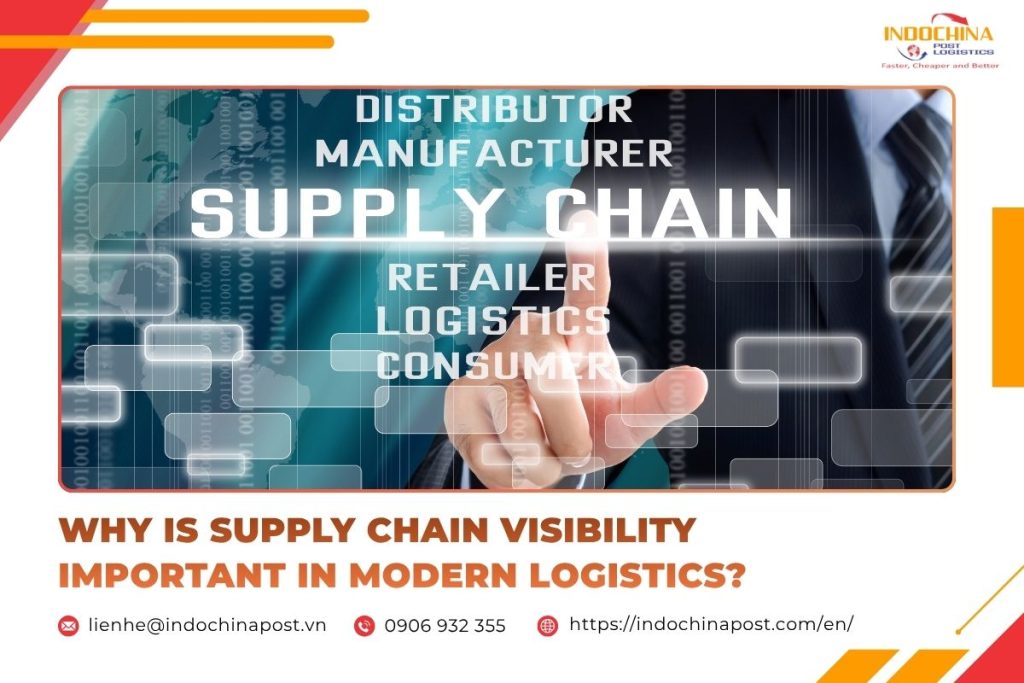
Why Is Supply Chain Visibility Important in Modern Logistics?
A shipment does not simply move from one location to another.
Behind every delivery, there can be manufacturers, suppliers, warehouses, freight forwarders, carriers, customs authorities and last-mile delivery providers.
When all these parties are involved, information becomes just as important as physical transportation.
This is where supply chain visibility becomes essential.
Supply chain visibility refers to the ability to track and understand what is happening to goods throughout the logistics process. It can include shipment status, location, estimated delivery time, inventory levels and potential disruptions.
For modern businesses, visibility is no longer just a useful feature.
It is becoming an important part of effective logistics management.

What Does Supply Chain Visibility Mean?
In simple terms, visibility means knowing what is happening to a shipment.
For example, a business may want to know:
- Has the shipment been picked up?
- Has it reached the warehouse?
- Has it departed from the origin country?
- Is it currently in transit?
- Has it arrived at the destination airport?
- Is customs clearance completed?
- When will it reach the customer?
Without reliable information, businesses may need to contact different parties to find answers.
This can take time and create unnecessary communication.
With better visibility, shipment information can be accessed more quickly and shared between relevant parties.

Why Does Visibility Matter?
1. Better Decision-Making
Logistics decisions often need to be made quickly.
If a shipment is delayed, a business may need to adjust its production schedule or inform customers.
If inventory is running low, the company may need to arrange another shipment.
Without accurate information, these decisions become more difficult.
Visibility provides businesses with a clearer picture of their logistics operations.
This allows them to respond based on information instead of assumptions.
2. Early Detection of Delays
Delays are part of international logistics.
Weather, airport congestion, customs procedures, capacity limitations and operational changes can all affect transportation schedules.
The problem is not always the delay itself.
The bigger problem can be discovering the delay too late.
Better shipment visibility allows logistics teams to identify changes earlier.
They can then communicate with customers, review alternative transportation options or adjust their internal plans.
This can reduce the impact of unexpected disruptions.
3. Better Customer Communication
Customers increasingly expect information about their shipments.
They want to know where their goods are and when they can expect delivery.
A simple tracking update can make a major difference to the customer experience.
For example, instead of saying:
“Your shipment is still being processed.”
A logistics provider can provide more useful information:
“The shipment has arrived at the destination airport and is currently undergoing customs clearance.”
Clear information creates better expectations.
It also reduces the need for customers to repeatedly ask for updates.

4. Visibility Connects Different Logistics Partners
International logistics often involves multiple companies.
A shipment may be collected by one provider, transported by another, handled at an airport terminal and delivered by a local carrier.
Each organization may have its own systems.
If these systems do not communicate effectively, information can become fragmented.
This creates what is sometimes called an information gap.
Digital logistics platforms and data-sharing standards can help connect different parts of the supply chain.
The goal is to create a more consistent view of the shipment journey.
5. Better Inventory Management
Supply chain visibility is not only about transportation.
It can also help businesses manage inventory.
A company may have products in several locations at the same time.
Some goods may be in production.
Others may be stored in a warehouse.
Another shipment may already be traveling internationally.
Without visibility, it can be difficult to understand the actual inventory position.
Better information allows businesses to make more informed decisions about purchasing, production and transportation.
This can help reduce both stock shortages and unnecessary inventory.
Technology Is Changing Supply Chain Visibility
Technology is playing an increasingly important role in logistics visibility.
Modern logistics systems can combine information from different sources.
These may include:
- GPS tracking.
- Warehouse management systems.
- Transportation management systems.
- Barcode scanning.
- IoT devices.
- Electronic shipping documents.
- Cloud-based platforms.
- Data analytics.
Artificial intelligence can also support logistics visibility by analyzing large amounts of operational data.
For example, AI can help identify unusual patterns and predict potential delays.
However, technology alone cannot solve every visibility problem.
The quality of the underlying data is equally important.

Data Accuracy Is Critical
A tracking system is only useful when the information behind it is reliable.
Incorrect shipment information can create confusion.
For example, if the wrong weight, destination or shipment status is recorded, different parties may make decisions based on incorrect information.
This is why logistics companies need clear procedures for collecting and updating data.
Accurate information should begin at the first stage of the shipment.
The more reliable the data, the more useful the visibility system becomes.
Visibility Is More Than Tracking
It is easy to think that supply chain visibility simply means tracking a package.
In reality, it is much broader.
Tracking tells a business where a shipment is.
Visibility helps explain what is happening, what may happen next and what action should be taken.
This distinction is important.
A shipment may be physically moving, but there could still be an issue with documentation.
Another shipment may be sitting at an airport because customs clearance has not been completed.
Knowing the location alone is not enough.
Businesses need context.
Conclusion
Supply chain visibility helps businesses understand what is happening throughout the logistics process.
It can improve decision-making, support customer communication, identify delays earlier and strengthen coordination between logistics partners.
For international shipping, this is particularly important because a single shipment may cross multiple countries and involve many different organizations.
The real value of visibility is not simply knowing where a shipment is.
It is having the right information at the right time to make better logistics decisions.
As technology continues to develop, companies that invest in reliable data and connected logistics systems will be better positioned to build faster, more transparent and more resilient supply chains.
See More
How Does Air Cargo Move From Pickup to Final Delivery?
Why Can’t an Aircraft Carry Every Type of Cargo?
How Does International Logistics Work?
